The biggest challenges in India's digital health adoption — infrastructure, privacy, staff training, and integration — and how Ninto addresses them.
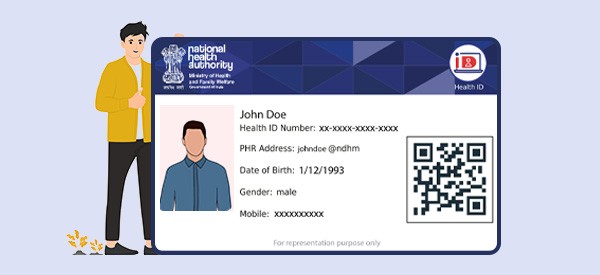
Driven by the Ayushman Bharat Digital Mission (ABDM) and the ubiquitous ABHA (Ayushman Bharat Health Account) IDs, the momentum is undeniable. As of early 2026, over 84.79 crore ABHA IDs have been generated, with nearly 82.69 crore records already linked to the national infrastructure.
However, moving "beyond the pilot stage" doesn't mean the path is clear. For hospital IT teams, private practitioners, and policymakers, several hurdles remain. This article breaks down the key challenges of EMR implementation in India from data security under the DPDP Act to the "human factor" of adoption.
1. EMR Data Security: Safeguarding the "Digital Patient"
In an era where data is the new oil, medical records are high-value targets. As hospitals migrate to cloud-based EMR platforms, the surface area for cyber threats expands.
The Risk: Sensitive data including Aadhaar numbers, diagnostic histories, and insurance details is highly vulnerable if encryption is weak.
The Consequences: Beyond patient mistrust, leaked data can lead to insurance fraud or legal liability under India’s Digital Personal Data Protection (DPDP) Act, 2023.
The Solution: The ABDM uses a "federated architecture." This means data isn't stored in one giant, hackable bucket. Instead, it stays with the provider and is only shared via encrypted, consent-based gateways.
2. Ease of Use: Why Design is a Clinical Necessity
If an EMR system is clunky, doctors won't use it. Period. In the high-pressure environment of an Indian OPD, every second counts.
The "Click" Test: Doctors judge software by how many clicks it takes to write a prescription or view a lab report.
Mobile First: With doctors constantly on the move, the best EMR software in India must offer seamless performance across Web, Android, and iOS.
Top Players: Platforms like HealthPlix, Eka Care, and Practo Ray are currently leading the charge by focusing on intuitive dashboards and customizable templates.
3. The Human Factor: Training & Change Management
Technology is only as good as the person operating it. One of the biggest barriers to Healthcare IT in India isn't the code, it's the culture.
The Learning Curve: Transitioning a staff that has used paper for 20 years requires more than a one-day workshop. Typing proficiency and digital literacy vary wildly across generations of medical staff.
Physician Buy-in: If the lead consultant doesn't use the EMR, the rest of the clinic won't either. Leadership must champion the "why" (better patient outcomes) alongside the "how."
4. Financial Barriers: The Cost of Going Digital
For a large hospital, an EMR is an investment. For a small rural clinic, it can feel like a burden.
Upfront Costs: Hardware, licensing, and data migration can be expensive.
Incentives: To bridge this gap, the Digital Health Incentive Scheme (DHIS) (active through March 2026) offers financial rewards for ABDM-linked transactions.
Market Growth: With the EHR market projected to grow at a 26% CAGR through 2030, we expect "economies of scale" to eventually make premium features affordable for smaller practices.
5. Interoperability: Breaking the Data Silos
The "Holy Grail" of digital health is interoperability, the ability for a lab report from Mumbai to be instantly readable by a doctor in Chennai.
The Unified Health Interface (UHI) is India’s answer to this. Much like how UPI revolutionized payments, UHI allows different software to "talk" to each other using FHIR (Fast Healthcare Interoperability Resources) standards.
6. The Privacy Paradox: Legal Stance in India
Under the Limitation Act 1963, it is recommended to keep outpatient records for 2 years and inpatient records for 3 years. But how do we protect them?
While India previously lacked a "HIPAA-equivalent," the landscape is changing. The DPDP Act and proposed frameworks like DISHA (Digital Information Security in Healthcare Act) are setting the gold standard for how Indian businesses handle sensitive health data.
Pro Tip: Organizations should look into secure platforms (like Ninto) that prioritize anonymization stripping away identifying details so data can be used for research without compromising the individual.
Conclusion: The Digital Inflection Point
The challenges, costs, security, and resistance are significant, but they are not insurmountable. With the government providing the digital backbone and private tech providing the innovation, India is on the verge of a healthcare revolution.