
India’s healthcare sector is at a digital tipping point. While we’ve seen UPI revolutionize payments and Swiggy redefine dining, the adoption of Electronic Medical Records (EMR) has been a slower climb. Today, the landscape is fragmented and uneven, yet the momentum behind the Ayushman Bharat Digital Mission (ABDM) is finally turning the tide.
Here is a deep dive into the current state of EMR in India, the hurdles doctors face, and why the "digital patient" is the future of Indian medicine.
What are Electronic Medical Records and Why Do They Matter?
At its simplest, an Electronic Medical Record (EMR) is the digital twin of a patient’s paper file. It’s a real-time, patient-centered record that makes information available instantly and securely to authorized users.
In the Indian context, medical documentation is a team sport. While a primary physician leads the charge, the accuracy of these records affects everyone from the lab technician to the surgical consultant. When optimized, EMR systems do more than just "store data"; they:
Reduce Clinical Errors: Automated alerts for drug allergies and redundant tests.
Improve Care Coordination: Seamless handovers between specialists.
Empower Data-Driven Decisions: Using historical trends to predict patient outcomes.
The Reality Check: Despite these perks, many Indian doctors complain that current EMRs are "click-heavy." Some report spending nearly 40% of their day on data entry, a major reason for the lingering "tech-resistance" in smaller clinics.
EMR Adoption in India: Where Are We in 2026?
Unlike many Western nations, India does not have a federal mandate requiring EMR usage. This has led to a "tiered" adoption levels across the country:
The Digital Divide: A Snapshot
Provider Type | Adoption Stage | Current Status |
Corporate Hospital Chains | Stage 6/7 | ~5% (Full digitalization: Apollo, Max, Fortis, etc.) |
Mid-sized Hospitals | Stage 3 | ~35% (Digital labs, but paper-based clinical notes) |
Small Clinics | Stage 0/1 | ~45% (Basic software for billing only) |
Rural/Standalone | Manual | ~15% (Still 100% paper-based) |
The jump from Stage 3 to Stage 6 is the hardest. It requires significant capital investment in high-speed infrastructure and specialized IT staff luxury items for many mid-sized Indian nursing homes.
The Biggest Hurdles: Why Isn't Everyone Digital Yet?
If the benefits are clear, why the delay? The "Road Ahead" is blocked by several persistent speed bumps:
The Funding Gap: High-quality EMR software and the hardware to run it are expensive. Without financial incentives, many providers see it as a cost rather than an investment.
Siloed Data (The "Island" Problem): Even when a hospital is digital, its records often can’t "talk" to the hospital across the street. This lack of interoperability means the patient still has to carry physical files.
Usability & Fatigue: Indian OPDs are high-volume. A doctor seeing 60 patients in a morning cannot afford a slow interface.
Privacy Concerns: With the Digital Personal Data Protection Act (DPDP 2023) now in full effect, providers are cautious (and sometimes confused) about the legalities of storing patient data in the cloud.
The ABDM Catalyst: Changing the Game
The Ayushman Bharat Digital Mission (ABDM) is the bridge across these gaps. By April 2026, the progress has been staggering:
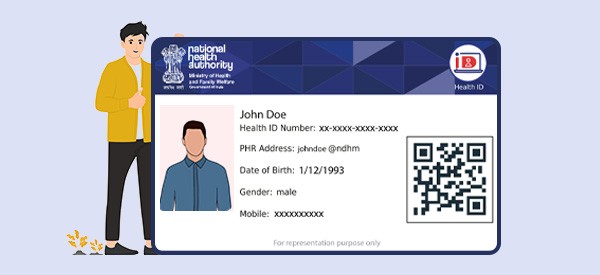
800 Million+ ABHA Accounts: Nearly 60% of the population now has a unique digital health ID.
650 Million+ Health Records Linked: Patients are beginning to view their reports directly on their phones via the ABHA app.
Unified Health Interface (UHI): Much like UPI for money, UHI is making it possible for different EMR softwares to exchange data seamlessly.
The Path Forward: A Connected India
India’s digital health revolution isn't coming, it’s here. To cross the finish line, we need:
User-Centric Design: EMRs built for the speed of an Indian OPD.
Affordability: SaaS-based (subscription) models that don't require massive upfront costs.
Standardization: Strict adherence to ABDM standards to ensure a patient’s record is as mobile as they are.
Want to dive deeper into the technical obstacles? Read our companion piece: Problems and Challenges: Digital Medical Records in India and explore how platforms like Ninto are simplifying ABDM integration for doctors nationwide.